
Aperçu des sections
-
 In this course, students will be introduced to the fundamental principles of electricity and magnetism, focusing on key concepts. Additionally, students will develop a strong foundation in mathematics. This curriculum will equip them with the essential knowledge to advance their studies in these fields, thereby providing a robust base for further academic and professional growth.
 Prerequisites:
To successfully engage with the content in Electricity and Magnetism, students should have a foundational understanding of the following concepts:
Basic Mathematics Skills:
- Algebra
- Trigonometry
- Calculus (differentiation and integration)
- Physics Fundamentals: Newtonian mechanics, including force, motion, and energy
-

Here's a reminder of basic definitions that are useful in this course, as seen in Chapter I of the first semester.
-
Diagnostic test 1
-
Diagnostic test 2
-
 Learning Objectives
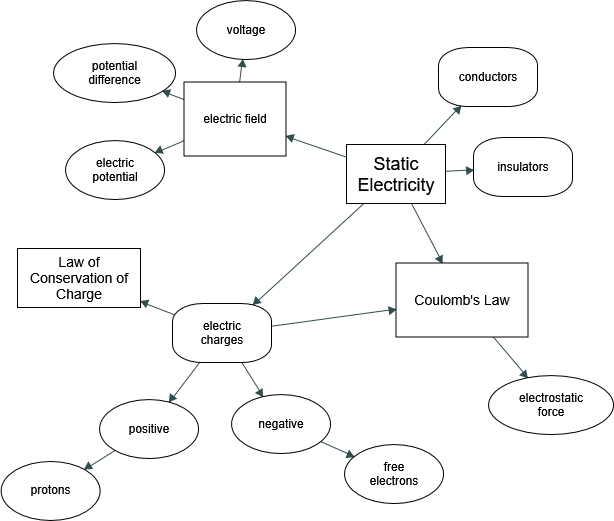
In this chapter we will explore the fundamental principles of electrostatics, the study of electric charges at rest. Starting with the nature and quantification of electric charge, we will differentiate between conductors and insulators. We will then delve into Coulomb's Law, electric fields, and electric potential, learning to calculate forces, fields, and potentials in various charge configurations. Additionally, we will cover electric potential energy, field lines, equipotential surfaces, and Gauss's Law. This comprehensive overview will equip you with a solid foundation in electrostatics, essential for advancing in the study of electricity and magnetism.
-
-
Formative Assessment
-
-
 Learning Objectives
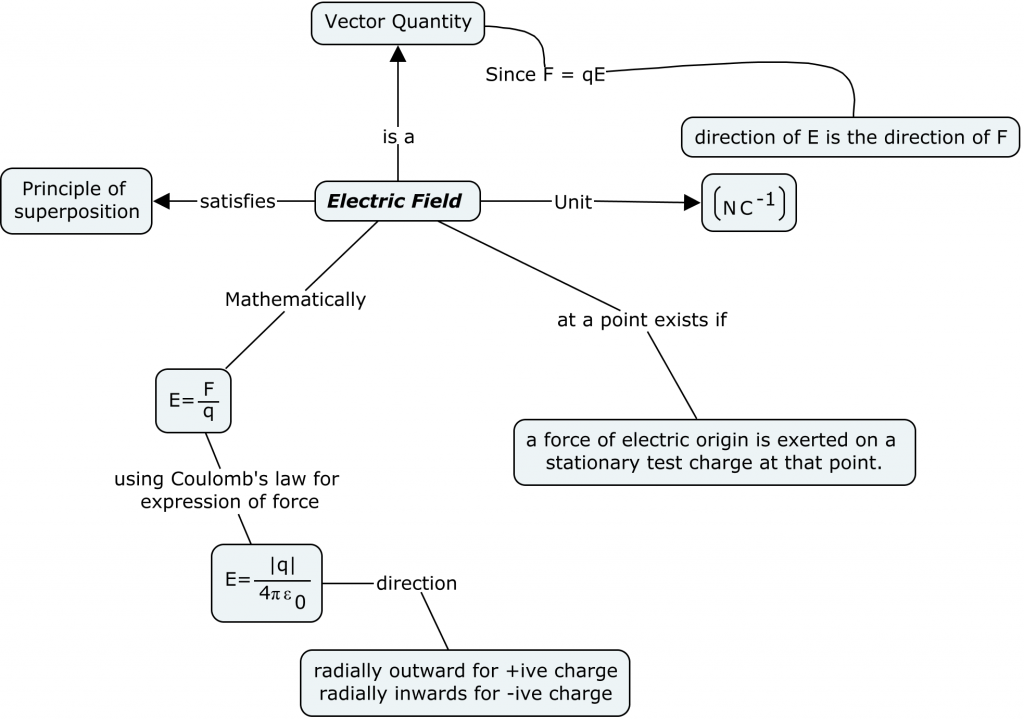
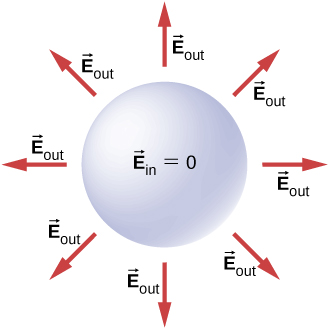
In this chapter, we will examine the behavior and properties of conductors in electrostatic equilibrium. We will start by defining what it means for a conductor to be in equilibrium and explore how charges distribute themselves on conductors, as well as the resulting equipotential lines and electric fields. Next, we will delve into the phenomenon of electrostatic induction, explaining both partial and total induction processes. Finally, we will cover capacitors and capacitance, explaining the concept of a capacitor, how to evaluate the capacitance of different systems, and how to determine the equivalent capacitance for capacitors arranged in series and parallel. This section will provide a thorough understanding of conductors in electrostatic situations, essential for mastering more complex topics in electricity and magnetism.



-
Formative Assessment
-
 Learning Objectives
In this chapter, we will cover the fundamentals of current and resistance. We will describe electrical current, its direction, and conduction in metals, as well as defining current density, resistivity, conductivity, and resistance. We will explore Ohm's Law and its applications, followed by a discussion on electrical energy and power, focusing on voltage, current, and power dissipation in resistors. Additionally, we will examine direct-current circuits, including electromotive force, voltage sources, and generator efficiency. Finally, we will introduce Kirchhoff's rules for analyzing complex circuits. This section will provide essential knowledge of current and resistance, crucial for understanding direct-current circuits.


-
Formative Assessment
-
 Learning Objectives
In this section, we will explore the principles of magnetostatics, focusing on the behavior and effects of magnetic fields. We will begin by examining the magnetic fields generated by magnets and those produced by electrical currents. We will delve into the Biot-Savart Law and Ampère’s Law, which describe the relationship between electric currents and the magnetic fields they generate. We will also study the action of a magnetic field on the motion of an electric charge, including Lenz's Force, and on an electric current, including Faraday’s Force. This section aims to provide a solid understanding of magnetostatics, essential for further study in electromagnetism and related fields.


-
Formative Assessment
-
 Improvement
-
Use chapters 05 to 13
-
Use chapters 21 to 28
-


